
Wearable Technology Is Accelerating. What Happens to the Mobile Phone Next?
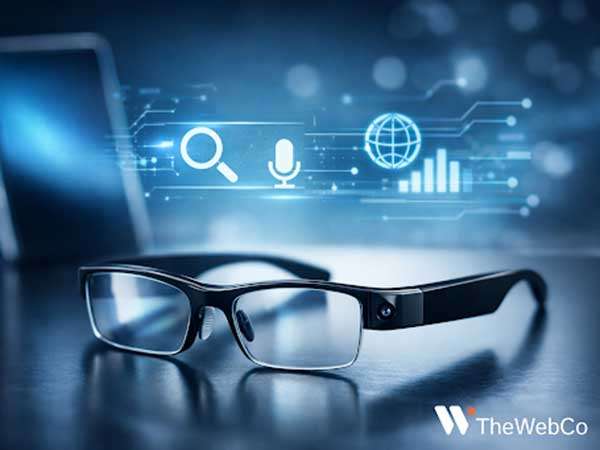
Wearable technology is moving from novelty to normality. Smartwatches are common. Fitness trackers are expected. Smart rings are quietly gaining ground. The next meaningful shift may come when Samsung releases its Android-based smart glasses. When a major manufacturer commits to a category, adoption rarely stays niche for long.
The real question is not whether wearable devices will grow. It is what that growth means for digital behaviour, and more specifically, what it means for the mobile phone that has dominated online interaction for more than a decade.
For fifteen years, the mobile device has been the centre of the digital world. Websites are built mobile-first. Advertising budgets prioritise mobile traffic. Social platforms are consumed primarily through handheld screens. Entire user journeys have been designed around thumbs and scrolling.
If the interface moves from the hand to the face, that assumption begins to shift.
This does not mean the mobile phone disappears. Technology rarely vanishes. It evolves. Desktop computers did not disappear when mobile rose. They became contextual. Tablets did not replace phones. They found their role. The mobile phone will likely follow the same path. It may remain the processing engine in the pocket, even if the primary interaction layer becomes wearable.
That distinction matters. If smart glasses reach mainstream adoption, interaction becomes more ambient. Information is not actively pulled through a screen. It is delivered in context, overlaid in real time, or accessed through voice. The behaviour changes before the hardware does.
Search behaviour has already evolved significantly over the past decade. Users moved from detailed desktop queries to shorter mobile searches. Voice search entered the conversation. AI-driven systems now provide direct answers rather than lists of links. Wearables may accelerate this progression.
If a user can glance at a building and see business information appear instantly, traditional search result pages become less central. If directions are displayed through augmented overlays rather than map apps, navigation shifts. If reviews and ratings surface automatically within a user’s field of vision, local visibility becomes even more influential.
In that environment, technical clarity outweighs visual complexity. Search engines and digital platforms require structured, machine-readable data to present information in new formats. Businesses that rely solely on attractive design without strong technical foundations risk becoming invisible within emerging interfaces.
Most websites today are designed around scrolling. Long layouts, visual storytelling and layered navigation dominate the experience. Wearable interfaces favour something different. They prioritise brevity, clarity and context. Instead of browsing through sections, users may receive concise answers delivered at the moment of need.
That shift places renewed importance on structured headings, schema implementation and page speed. The fundamentals that underpin strong technical SEO become even more critical when content must be extracted and displayed across multiple device types.
Voice interaction also becomes more significant in a wearable environment. Speaking is often more natural than typing, particularly when hands are occupied. If smart glasses integrate seamless voice control, conversational search queries are likely to increase.
Instead of typing “airport parking Auckland”, a user might ask, “Where is secure airport parking near Auckland Airport with good reviews?” The query becomes longer and more contextual. Content that answers complete questions, rather than targeting isolated keywords, becomes more discoverable.
For New Zealand businesses, these developments may feel distant. Wearables are not yet dominant locally, and adoption often trails larger markets. However, digital behaviour rarely shifts evenly. It begins with early adopters, spreads through higher value consumers and gradually filters into the mainstream.
For businesses operating in competitive sectors, especially those reliant on search visibility, ignoring early behavioural shifts can create long-term disadvantage. This is not about chasing trends. It is about strengthening foundations.
Structured data implementation is one such foundation. Clear schema markup enables search engines to understand business information precisely. In an environment where information may be displayed outside traditional search pages, clarity matters.
Local optimisation is another. If wearable interfaces enhance location-based data delivery, proximity, reviews and accurate business details become more influential. A well-optimised local presence positions a business to surface within contextual overlays and voice responses.
Performance also becomes non-negotiable. Fast-loading pages and lightweight structures improve usability across all devices, particularly those relying on rapid data retrieval. Wearable interfaces are unlikely to reward heavy, bloated websites.
None of these adjustments require radical redesign. They require refinement. Businesses that invest in technical integrity rather than surface changes are better equipped for interface evolution.
The mobile phone itself will remain central for payments, authentication and media consumption. Its dominance as the primary screen, however, may soften. Instead of constantly staring at a handheld display, users may interact with information more fluidly throughout their environment.
This transition mirrors what happened with desktop computing. Desktops still exist, but they are no longer the focal point of daily digital engagement. They serve a role rather than defining the experience.
The commercial implications are practical. There is no need for immediate overreaction. There is no requirement to rebuild digital platforms in anticipation of widespread smart glasses adoption. What is required is awareness.
Digital strategy should not be built around a single device category. It should be built around user behaviour. When behaviour shifts, strategy must adapt.
Samsung’s entry into Android-based smart glasses could mark the point at which wearable interfaces move from concept to credible alternative. Adoption may be gradual, but experimentation will follow. Businesses that understand how emerging interfaces alter discovery and decision-making will remain visible.
Visibility in the next phase of digital evolution will belong to companies that combine technical precision with strategic patience. Strong site structure, clean data, clear messaging and performance optimisation provide resilience regardless of device.
The mobile phone will not disappear. It will adapt. The interface layer may change. The infrastructure remains.
Technology continues to evolve. User behaviour evolves with it. The businesses that pay attention early tend to adjust more smoothly than those that wait for change to become unavoidable.
Wearable technology is advancing steadily. The question is not whether it will influence digital interaction. It is how prepared your digital presence is when it does.
Is your website technically prepared for the future of search?
Wearable devices, AI platforms, and voice search rely on structured data and technical clarity.
If your website is not properly optimised, your business risks becoming invisible.
Request a technical visibility assessment to understand where you stand.

LET'S TALK
GET IN TOUCH
"(Required)" indicates required fields