
Enterprise SEO Strategy for Large and Complex Websites
SEO as Corporate Infrastructure
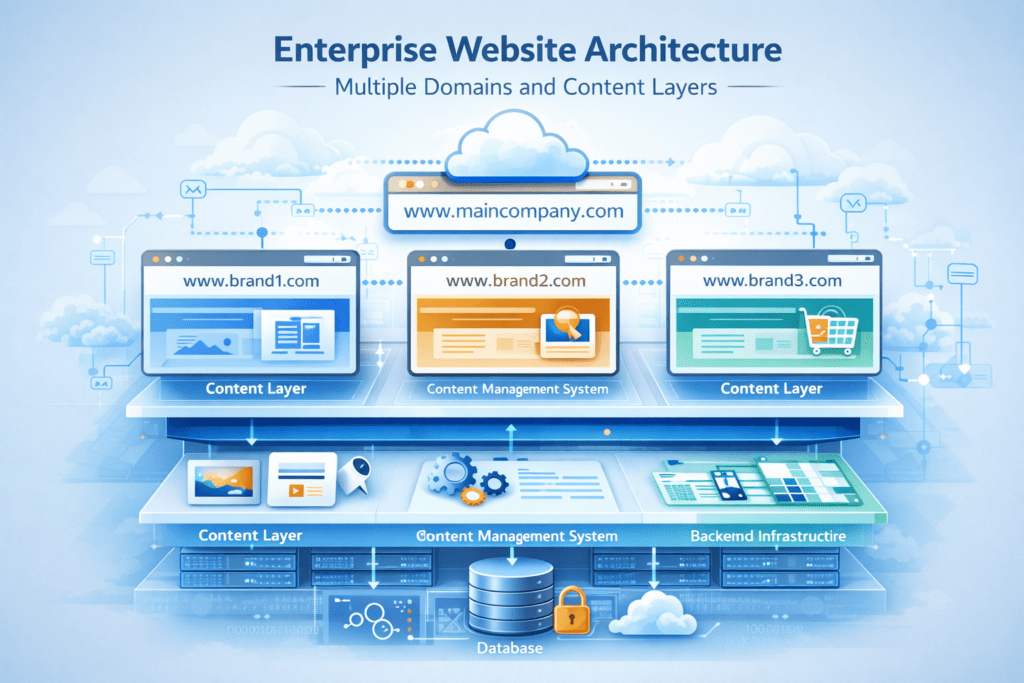
For enterprise organisations, SEO is no longer simply a marketing activity. It becomes part of the organisation’s digital infrastructure. Large websites frequently contain thousands or even tens of thousands of pages spread across different sections, domains, or regional versions. These environments evolve constantly as teams publish new content, launch new services, and update existing pages.
Without clear technical structure and governance, this growth can gradually weaken search visibility. Pages become difficult for search engines to crawl efficiently, internal links lose clarity, and duplicate or outdated content begins to dilute authority. Enterprise SEO focuses on building a stable architecture that supports search performance across the entire digital ecosystem. Rather than concentrating on individual pages, the strategy ensures that the entire platform communicates clearly with search engines.
Why Large Websites Lose Search Visibility
Many organisations assume that brand recognition alone guarantees strong performance in search results. While brand authority can help, search engines still rely on technical signals and content structure when determining which pages deserve visibility.
One of the most common challenges is the accumulation of technical debt. Over time, websites often accumulate outdated templates, redundant pages, broken internal links, and inefficient navigation structures. Individually these problems may appear minor, but collectively they can make it difficult for search engines to understand the hierarchy of the website.
Another frequent issue occurs when different departments publish content independently without a shared SEO framework. Marketing teams, product teams, and regional offices may all create pages that target similar topics. When these pages compete with each other, search engines struggle to determine which one should rank. Addressing these challenges requires a coordinated strategy that aligns technical teams, content creators, and marketing leadership.
Managing SEO Across Large Organisations
A common question raised by enterprise teams is how SEO can be managed effectively when responsibility is shared across multiple departments. The answer lies in governance rather than simply optimisation. Enterprise SEO strategies establish clear processes that guide how content is created, structured, and maintained across the organisation.
This often includes documented standards for page structure, internal linking, and metadata. When development teams understand how technical decisions affect search visibility, they can incorporate SEO considerations directly into the development process. Similarly, content teams benefit from guidelines that clarify how new pages should be positioned within the wider architecture of the site. Instead of producing isolated articles, each piece of content contributes to the overall authority of the website.
The Impact of Technical Debt on Search Performance
Technical debt is a concept often associated with software development, but it has equally significant implications for search performance. As websites grow, small inefficiencies accumulate. Pages may load slowly because older templates were never optimised. Duplicate versions of similar pages may exist because different teams created them independently. Internal links may lead to outdated content that no longer represents the organisation accurately.
Search engines must navigate this complexity when crawling the website. If they encounter large numbers of low value or redundant pages, the most important content may receive less attention. Enterprise SEO addresses these issues by auditing the technical foundation of the website and identifying areas where the structure can be simplified or improved. By resolving technical debt, organisations allow search engines to focus on the pages that provide the greatest value to users.
How AI Platforms Use Corporate Website Data
The way information is discovered online is evolving rapidly. AI driven search platforms now analyse authoritative websites when generating answers to complex questions. For large organisations this development creates both opportunity and responsibility. When a website provides clear, structured information about its services, expertise, and industry insights, AI platforms are more likely to reference it as a trusted source.
However, if the information is fragmented or difficult to interpret, these systems may overlook the organisation entirely. Enterprise SEO therefore plays an important role in preparing corporate websites for the future of search. Structured data, clear page hierarchies, and authoritative content allow search engines and AI systems to interpret the organisation’s knowledge accurately.
Protecting Search Visibility During Website Migrations
Enterprise organisations regularly update their websites to reflect changes in branding, technology platforms, or organisational structure. These updates can involve redesigns, platform migrations, or the consolidation of multiple websites. While these projects are often necessary, they introduce significant risk to search performance if they are not managed carefully.
Changes to URLs, internal links, and page structures can disrupt the signals that search engines rely on when ranking content. Without a structured migration strategy, years of accumulated authority can be lost almost overnight. Enterprise SEO ensures that these transitions are planned carefully. Redirects are mapped correctly, valuable content is preserved, and search engines are guided smoothly from the old structure to the new one.
Strategic Enterprise SEO Solutions
Enterprise SEO strategies combine technical expertise with organisational alignment:
Crawl budget management ensures that search engines focus their attention on the pages that deliver the greatest business value.
International SEO architecture helps organisations operating across multiple regions present the correct version of their content to users in different markets.
Governance frameworks establish clear guidelines that allow internal teams to create and maintain content without compromising search performance.
Advanced data analysis provides insight into how search engines interact with the website, revealing opportunities to improve visibility and performance.
Enterprise SEO Roadmap
Phase 1: Focuses on stabilising the technical foundation of the website. This involves identifying structural issues, resolving technical debt, and establishing governance processes.
Phase 2: Attention shifts toward improving the architecture of the website so that important pages are easier for search engines to discover and understand.
Phase 3: Focuses on strengthening authority through structured content and advanced data signals that support modern search algorithms and AI systems.
Phase 4: Focuses on long term monitoring and refinement to ensure that future updates continue to support strong search performance.
Speak With an Enterprise SEO Strategist
Enterprise organisations require a strategic approach to search visibility that balances technical precision with organisational coordination. A well structured enterprise SEO strategy ensures that complex digital platforms remain visible, authoritative, and aligned with the long term goals of the organisation.

LET'S TALK
GET IN TOUCH
"(Required)" indicates required fields