
Local SEO Services for New Zealand Businesses
The Local Search Landscape
Search behaviour has changed dramatically over the past decade. Customers no longer browse directories or compare dozens of websites before choosing a provider. Instead they perform a quick search on their phone and select one of the first businesses that appears in the results.
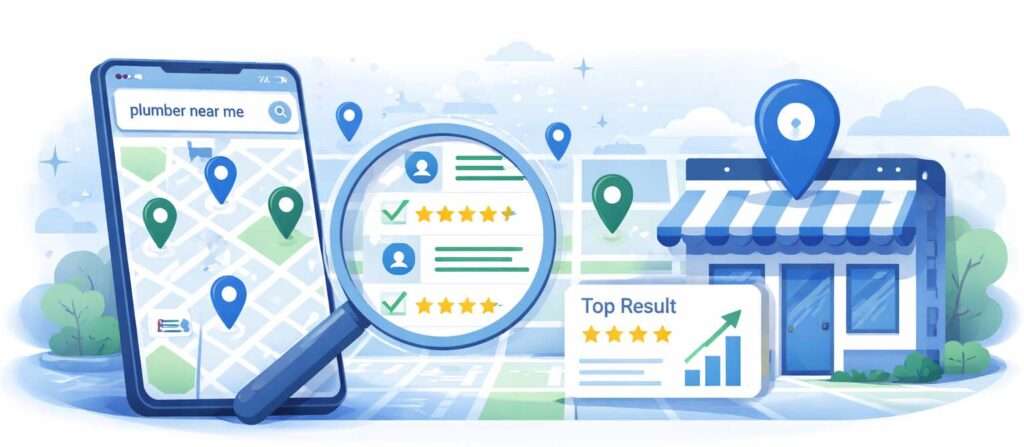
Modern search results reflect this shift in behaviour. Instead of presenting a simple list of links, Google now shows maps, reviews, opening hours, and direct contact buttons before traditional website listings. A potential customer can often decide who to contact without ever leaving the search results page.
For local businesses this means your search presence effectively acts as a digital shopfront. When someone searches for a nearby service they immediately see your reputation, your location, and whether your business appears trustworthy. If those signals are incomplete or inconsistent, the customer will often move directly to a competitor.
Local SEO ensures that when people search for services in your area your business appears clearly, confidently, and with the strongest possible signals of credibility.
What is Local SEO?
Local SEO is the process of improving a business’s visibility in location-based search results. This includes appearing in Google Maps listings, “near me” searches, and city-specific queries where customers are looking for nearby services.
This optimisation typically involves improving Google Business profiles, location pages, directory listings, and local website signals.
Why Local SEO Matters
Most customers now search online before choosing a nearby business. When someone searches for services in their area, the companies that appear in local search results receive the majority of enquiries.
Strong local SEO ensures your business is visible at the exact moment someone nearby is looking for your services.
The Rise of Hyper Local Search
Search engines are increasingly precise when delivering results for local queries. Instead of returning broad city level results they now analyse the exact location of the user and match it with nearby businesses that appear most relevant.
This shift has led to the rise of hyper local search behaviour. Customers frequently include location signals within their queries or rely on their device location to show nearby options. Typical searches now include:
- Plumber near me
- Electrician in Ponsonby
- Dentist open now
These searches carry strong commercial intent. People performing them are not researching in advance. They are actively looking for a business to contact immediately. Search engines therefore prioritise businesses that demonstrate clear geographic relevance and strong reputation signals. AI driven search platforms also rely heavily on structured local data when generating answers to location based queries.
If your online presence does not clearly communicate where you operate and what services you provide, your business may never appear in these results.
Why Many Local Businesses Struggle With Search Visibility
Many business owners believe that launching a website is enough to attract customers through search. In practice, search visibility depends on a wide network of signals that work together to demonstrate relevance and credibility. When one or more of these signals is missing, search engines may favour competing businesses even if their service quality is no better.
Common issues we encounter include incomplete or poorly configured Google Business Profiles, inconsistent contact details across online directories, and websites that provide little information about the specific areas served by the business. Another frequent problem is the lack of recent customer reviews. Reviews act as a form of social proof that reassures both customers and search engines that the business is active and trusted.
Technical issues can also reduce visibility. Slow loading pages, poorly structured content, and websites that search engines struggle to crawl can all limit the ability of a business to appear in search results. These issues are rarely obvious from inside the business. However, once they are identified and resolved, search visibility often improves rapidly.
No obligation. We will show you exactly where your search opportunities exist.
Why Some Businesses Appear Higher in 'Near Me' Searches
When two businesses offer similar services in the same location, search engines must determine which one deserves to appear first. This decision is based on a combination of signals rather than a single factor.
Proximity remains important, but it is only one part of the equation. Search engines also examine the completeness of the business listing, the quality and quantity of reviews, the authority of the associated website, and the consistency of business information across the internet. Businesses that manage these signals carefully tend to appear more frequently in map results and local searches. Over time this increased visibility leads to more enquiries and stronger brand recognition within the local area.
Getting Your Business to Appear in Google Maps Results
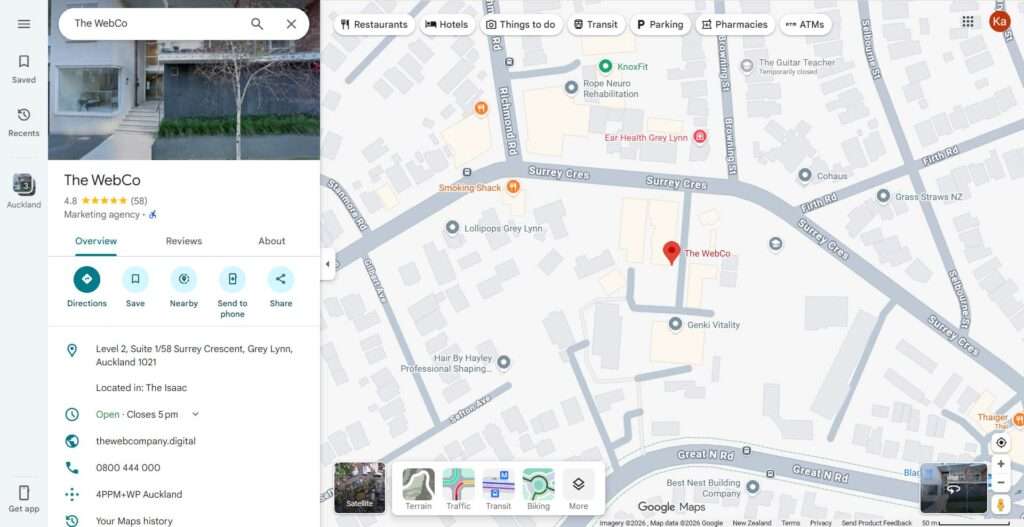
One of the most common questions business owners ask is how to appear within the map results that appear at the top of many local searches. Achieving visibility in these results requires a combination of accurate data, strong reputation signals, and a website that clearly communicates the services offered by the business.
The process begins with a fully optimised Google Business Profile. Categories must be selected carefully, service areas should be clearly defined, and the profile should contain accurate contact information and images that represent the business. However, optimisation does not end with the listing itself. Search engines also examine the associated website and external references to the business across the internet. When these signals align, the likelihood of appearing in map results increases significantly.
Improving Visibility in Specific Suburbs
Local search has become increasingly granular. Customers often search for services in a specific suburb or neighbourhood rather than an entire city. Businesses that structure their website around clearly defined service areas have a significant advantage in these searches.
Creating dedicated pages that describe services offered within particular suburbs allows search engines to connect the business with highly targeted queries. This approach also helps customers feel confident that the business genuinely operates within their area. Clear geographic signals make it easier for search engines to match the business with relevant searches.
Do You Need a Physical Office for Local SEO?
Some businesses assume that a physical storefront is required to rank in local search results. While having a physical location can be helpful, it is not essential for many service businesses. Companies that travel to their customers, such as electricians, plumbers, or cleaning services, can still achieve strong visibility if their service areas are clearly defined within their business profile and website.
The key factor is clarity. Search engines must understand exactly where the business operates and what services it provides within those areas.
The Four Pillars of Local Search Authority
Effective local SEO relies on four interconnected elements that together signal credibility and relevance:
Google Business Profile optimisation ensures that the listing presented to customers contains accurate and compelling information.
Hyper local website structure allows search engines to understand exactly where the business operates and what services it offers.
Reputation management strengthens trust through consistent customer feedback and positive reviews.
Citation consistency ensures that business information remains identical across directories and data sources throughout the internet.
Local SEO Roadmap
The process of strengthening local visibility typically follows a structured progression:
Phase 1: Focuses on identifying and correcting inconsistencies in business listings and website signals.
Phase 2: Attention shifts toward improving the business profile and expanding location specific content across the website.
Phase 3: Focuses on strengthening reputation signals through reviews and local mentions.
Phase 4: Concentrates on improving website conversion paths so that increased traffic results in measurable enquiries.

LET'S TALK
GET IN TOUCH
"(Required)" indicates required fields